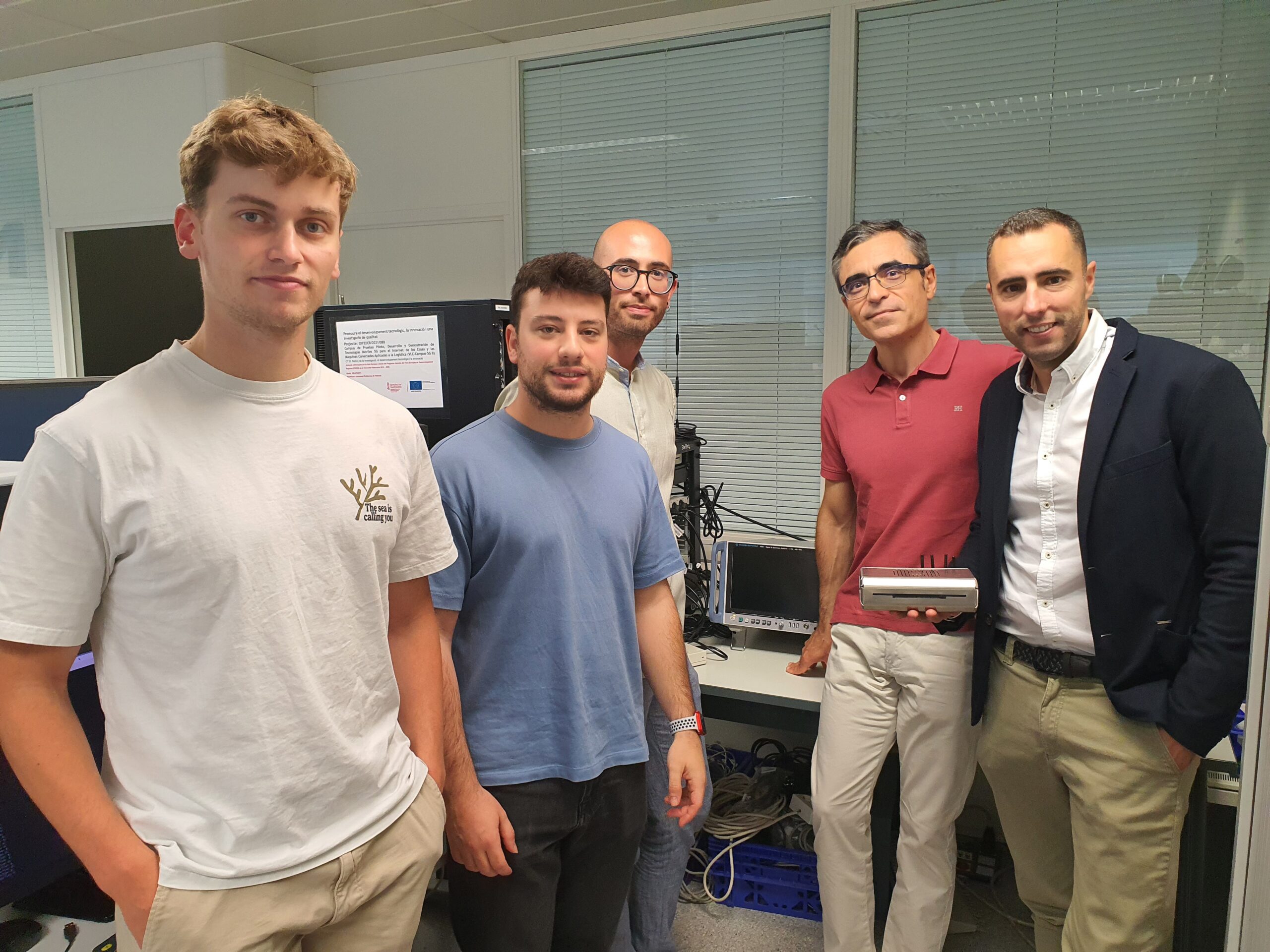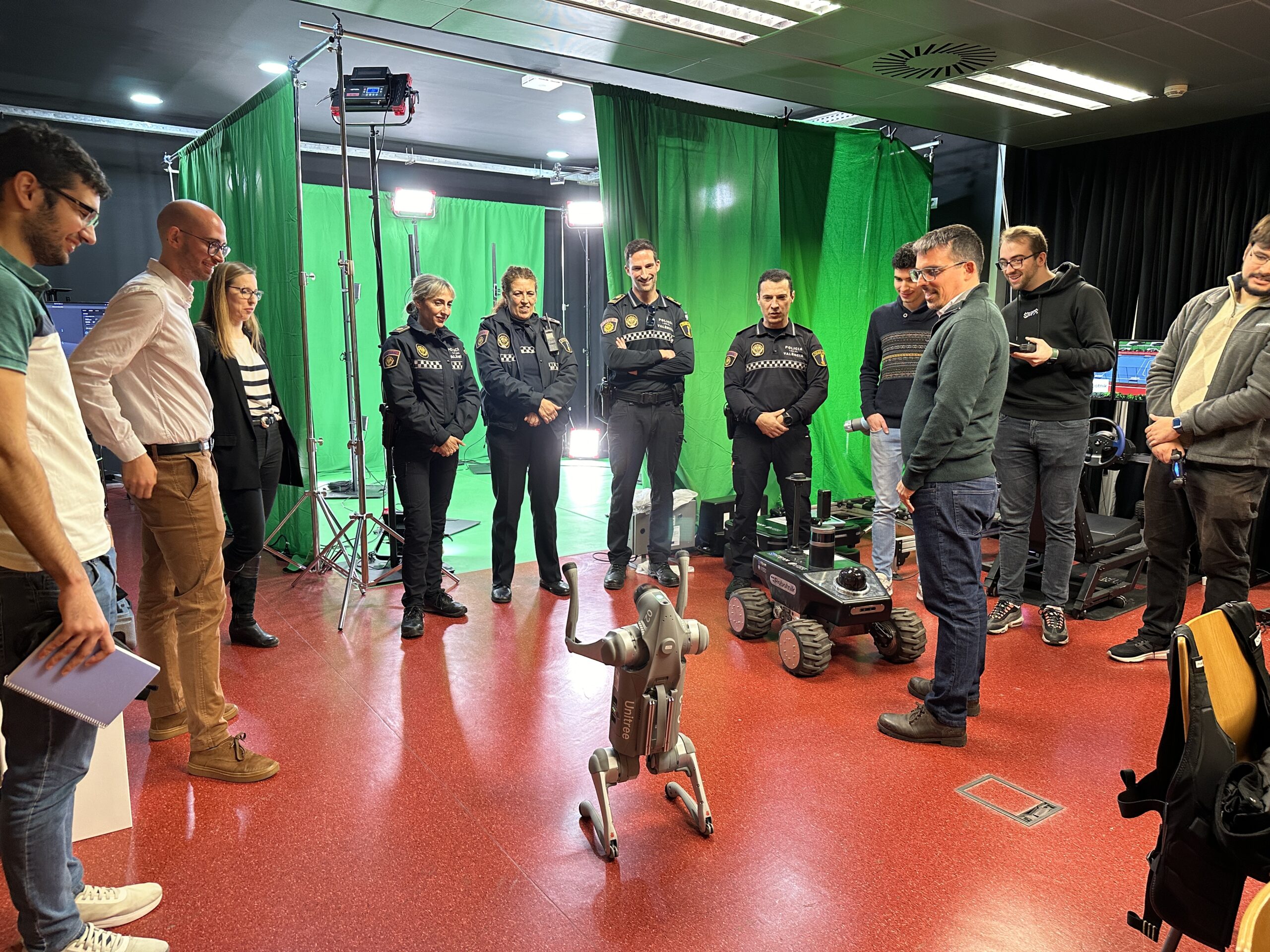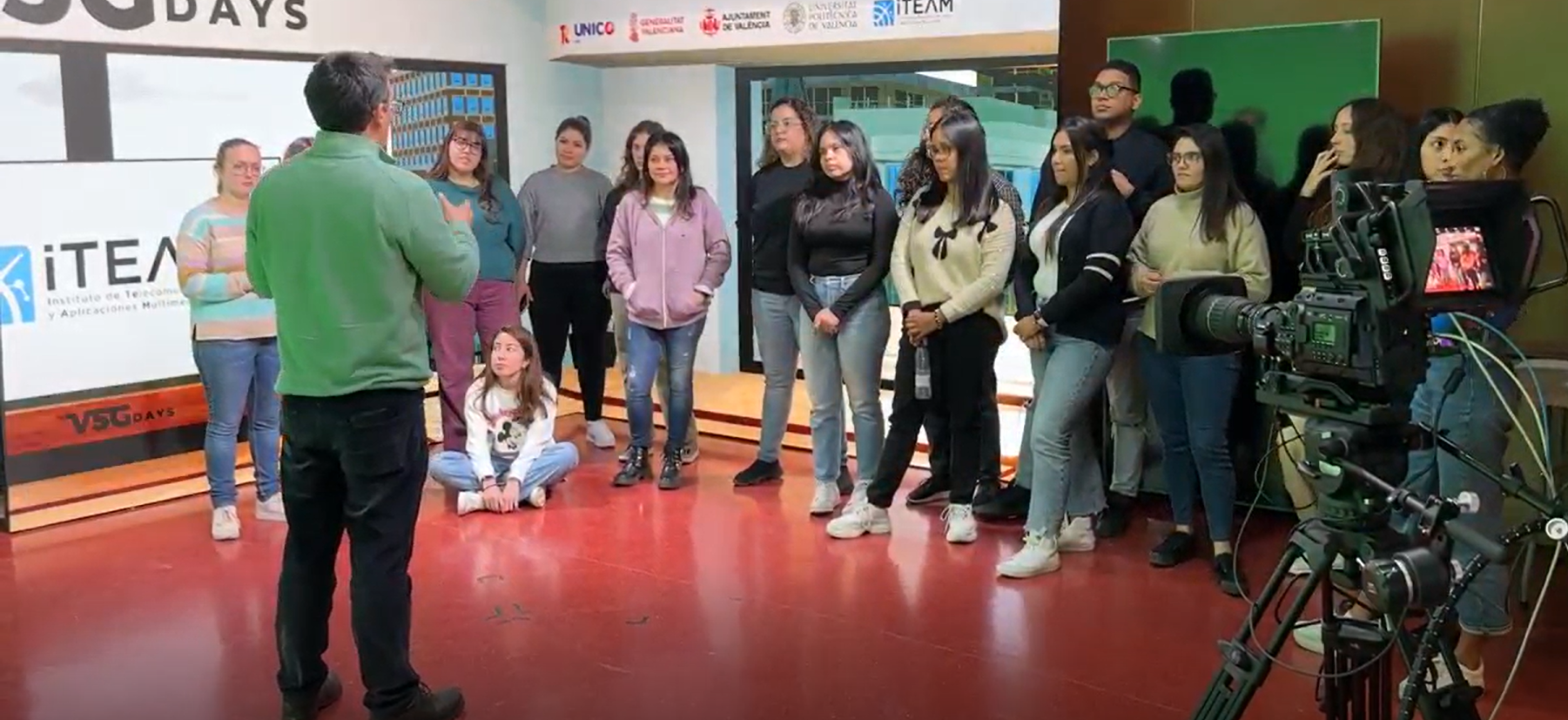

The Institute of Telecommunications and Mobile Applications (iTEAM) of the Polytechnic University of Valencia (UPV) and Telefónica present an innovative use case of holographic capture applied to training. Within the framework of a national project in which Telefónica and UPV collaborate, they have recently launched an immersive communications laboratory at the university, which was presented last December, a pioneer in the development of experiences through holographic technology based on 5G communications, including the 26 GHz millimeter band.
The first use case developed in this laboratory between Telefónica and the UPV is called ‘Holograma fallero: el arte del moño’ [Fallero hologram: the art of the bun]. It consists of a virtual reality (VR) experience where users, using VR glasses, can follow a tutorial guided by experts in Valencian hairdressing. This experience offers a detailed vision of the process of creating the fallera hairstyle, which by following it remotely and with the support of tutors, allows for following the process in a totally innovative way.
As part of this project, Telefónica has deployed at the UPV a volumetric video capture set composed of 13 Intel Realsense D455 cameras and a software solution from the American company Evercoast. These tools allow for synchronized capture and video processing to generate high-quality 3D content in real time.
Furthermore, Telefónica is working on the optimization of the 5G private network at the UPV. This network will provide the necessary performance for the transmission of volumetric video in real time, which will enable more use cases for different trainings.
The consumption of volumetric video represents a new way of interacting with content, and allows users to visualize it from any angle, as if they were physically present. This type of content, especially when used with Virtual Reality glasses as in the case of the ‘Holograma Fallero’, offers a unique immersive experience. In this sense, the consumption of volumetric video also represents a technical challenge due to its high weight per second and real-time processing requirements, which tests both the hardware and the network.
This is the first training in which holography is applied, a first step where further research evolutions and new use cases will be carried out.
The launch of the laboratory and of this initiative is part of the ‘Avanzando-5G-Inmersivo’ and ‘Avanzando-5G-Gemelos Digitales’ projects of the UNICO I+D 5G plan, financed by the Ministry for Digital Transformation and Civil Service of Spain with NextGenEU funds from the European Commission.